- (407) 774-8324
- JDMFlorida@gmail.com
 Login
Login


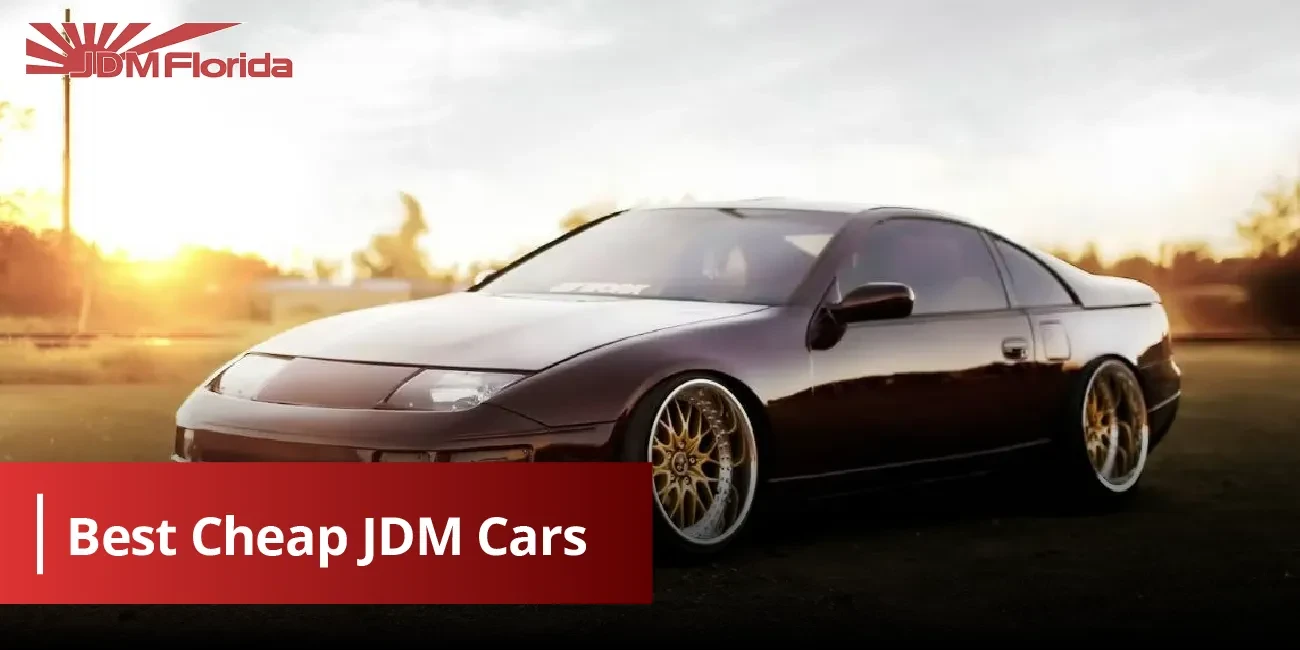
15 Best Cheap JDM Cars Under $10,000 (Beginner-Friendly)
If you're hunting for the best JDM cars without spending a fortune, you're in the right place. A lot of great Japanese cars still sell for under $10,000. You just need to know where to look and what to check. This guide covers 15 solid picks, plus a few buying tips that can save you from a bad deal.
We'll also discuss sports cars, drift platforms, tuning projects, and a couple of oddballs that don't get enough credit. Whether you want a weekend toy or a daily driver with some character, there's likely something here for you.
What counts as a "cheap JDM car"?
"Cheap" is relative in this hobby. For this list, we're sticking to cars you can realistically find for $10,000 or less in decent, running condition. That doesn't mean rock bottom or rust bucket. It means a car you could actually drive home and enjoy without a huge repair bill waiting for you.
Some of these are 90s JDM cars that have held their value well. Others are less famous models that fly under the radar, which is exactly why they're still affordable. Prices shift with the market, though, so treat these as a general range rather than a guarantee.
How we picked the best JDM cars under $10k
We looked at a few things. First, reliability. A cheap car that breaks down every month isn't actually cheap. Second, parts availability, since a JDM car with no spare parts market becomes a headache fast. Third, we factored in fun. Some cars on this list are practical. Others exist purely because they're a blast to drive.
We also checked how these models typically show up in listings across the US. Some sellers price aggressively low to move inventory fast, and those deals disappear quickly if you're not paying attention.
The 15 best cheap JDM cars under $10,000
Here's the full rundown. We've grouped a few into standout categories first, since that tends to match how most buyers actually shop.
Best all-rounder
A used Honda Civic Si or a Mazda Roadster (known as the Miata here) tends to top this category. Both are known for being genuinely reliable while still being fun to drive. Parts are everywhere, insurance is usually reasonable, and neither one demands constant babysitting. If you want one car that does most things well, start here.
Best JDM car for beginners
The Toyota Corolla or an early Civic hatch makes a great starting point. Simple mechanics, Front Wheel Drive, and a huge community mean help is never far away if something goes wrong. You won't get thrown into a steep learning curve with rear-wheel-drive dynamics right out of the gate.
Best cheap drift car
The Nissan Silvia S13, sold in the US as the 240SX, is still one of the most popular JDM drift cars around. Rear Wheel Drive, a light chassis, and decades of aftermarket support make it the default choice for a lot of first-time drifters. It's not the cheapest car on this list anymore, but you can still find rough examples in budget.
Best tuning platform
The Mitsubishi Eclipse or a turbocharged Toyota Celica gives you plenty to work with. These cars respond well to bolt-on mods, and there's no shortage of guides online for taking them further. If you like wrenching as much as driving, this is where to look.
Fastest for the money
A well-maintained Nissan 300ZX or a turbo Toyota MR2 will surprise you. Neither one is a modern supercar, but for the price, the power-to-weight ratio is hard to beat. Just budget for maintenance, since older turbo systems need attention.
Beyond those five categories, keep an eye on:
Each brings something different, whether that's rarity, quirky styling, or just a driving feel you won't find in a modern car.
What to check before buying a used JDM car
Buying any used car takes some caution, but JDM cars come with a few extra things worth checking.
Rust, mileage, and service history
Rust is the biggest silent killer for older Japanese cars, especially in areas that see snow and road salt. Check the wheel wells, the floor pans, and the frame rails closely. A car that looks clean in photos can still hide serious rust underneath.
Mileage matters less than most buyers assume, since many of these engines were built to run well past 150,000 miles. What matters more is whether the previous owner kept up with basic maintenance. Ask for records if you can. If there aren't any, factor that uncertainty into your offer.
Engine swaps and mods to watch for
A lot of cheap JDM cars have been modified at some point, and that's not always a bad thing. Still, you'll want to know exactly what was done. A poorly executed engine swap or a rushed suspension mod can cause problems down the road that aren't obvious during a quick test drive.
Ask direct questions. When was the work done? Who did it? Do they have receipts or photos from the build? A seller who can't answer these clearly might be hiding something, or they might just be unaware of the car's full history. Either way, it's worth a second look before you commit.
Cheap JDM cars vs imported JDM cars: what you can actually get in the US
Here's where a lot of new buyers get confused. Cars like the Civic, Miata, Corolla, and 240SX were all sold new in the United States, which means used examples are common and cheap parts are easy to find nationwide.
Genuine JDM imports are a different story. Right-hand-drive models like the Skyline, certain Silvia trims, and kei cars like the Honda Beat were never officially sold here. To bring these in legally, they generally need to be at least 25 years old under federal import rules. This is a big reason why 90s JDM cars have become such a hot category lately, since more models cross that 25-year threshold every year.
Forbes recently covered how the 25-year import rule that opened up JDM legends to American buyers has made cars like the R34 GT-R and NSX Type S newly available, and prices on those specific models have moved fast as a result.
If you want a taste of true JDM ownership without spending big money, the import route is worth exploring. Just know it takes more research and patience than buying a domestic market Civic off a local lot.
Where to find imported JDM cars and engines
If you've decided you want the real deal instead of a domestic market JDM lookalike, working with a specialist import dealer makes the process much smoother. They handle the paperwork, the shipping, and often the compliance checks that a private buyer would struggle with alone. Browse our current RHD inventory to see what's actually available right now, since stock changes often as new imports clear customs.
This route also opens the door to swapping in a genuine JDM engine rather than buying a whole car. It's a popular option for builders who already have a chassis and just want more power under the hood.
Best cheap JDM cars FAQs
What's the cheapest JDM car worth buying?
Honestly, it depends on your goals. If you want something dependable and easy to live with, an older Corolla or Civic often comes in under $5,000 and still runs strong for years. If you want something with more character, a higher mileage MR2 or Eclipse can also fall into that lower price range, though you'll want to inspect it more carefully first.
Are cheap JDM cars reliable?
Many are, yes. Japanese automakers built a reputation for reliability for a reason, and a lot of these engines are genuinely tough. However, reliability drops fast if a car has been neglected or heavily modified without proper care. A cheap price tag doesn't guarantee a trouble-free car. It just means you're getting a lower entry point, so the inspection step matters even more.
If you're not sure where a specific model fits into the bigger JDM picture, contact us now. It's a good starting point if you're still new to the space and want the full context before you start shopping.