- (407) 774-8324
- JDMFlorida@gmail.com
 Login
Login


KA24DE Guide: The 240SX Engine & the KA vs SR Debate
If you own a 240SX or you're shopping for one, you already know the name KA24DE. This 2.4-liter engine powered Nissan's most famous drift chassis for almost a decade. It's not flashy. It's not the engine tuners brag about at car meets. But it's tough, cheap to fix, and it takes boost well when you build it right.
This guide covers what the KA24DE is, how it compares to the older KA24E, and why so many owners still argue about swapping it for an SR20DET.
What is the KA24DE?
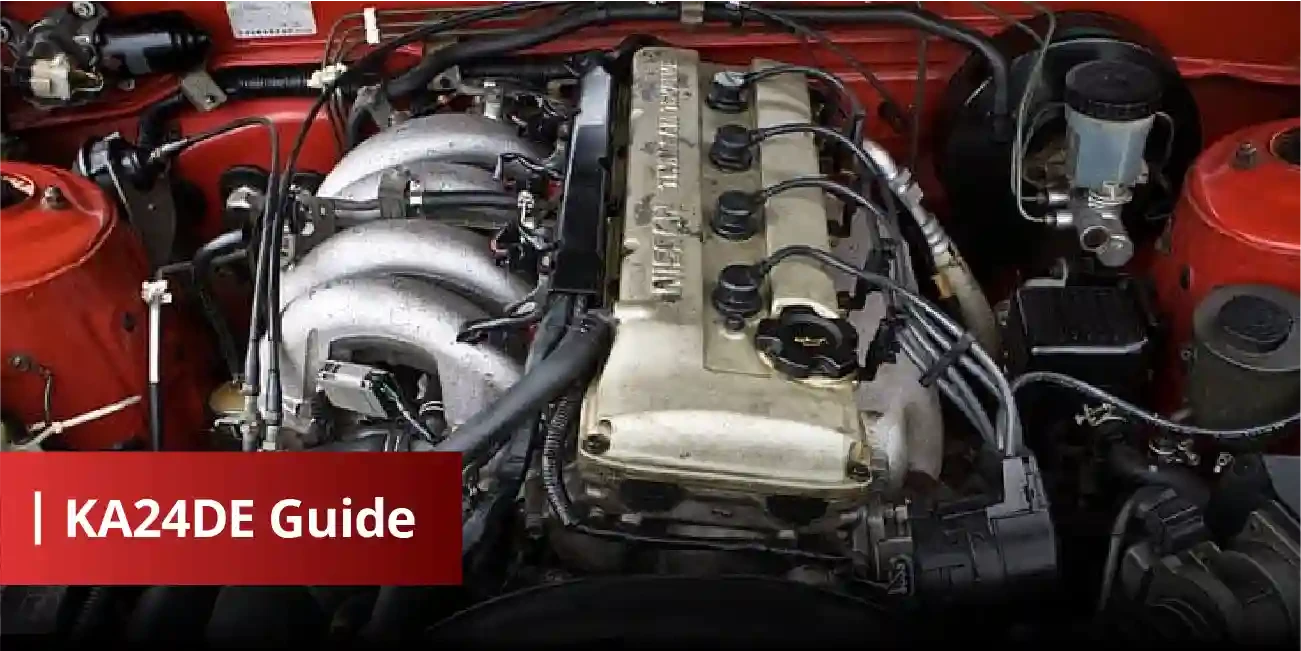
The KA24DE is a 2.4-liter inline four-cylinder engine built by Nissan. It uses a dual overhead cam design with four valves per cylinder, which is what the "D" in the name stands for. The "E" refers to its electronic fuel injection system. Nissan built this engine as part of its KA engine family, a series of four-stroke inline four gasoline piston engines offered in 2.0- and 2.4-liter versions.
Nissan designed the KA24DE for daily use first. Trucks and SUVs got it before the sports car did. So don't expect a race-bred motor. Expect something built to survive years of neglect, which is exactly why it still shows up in junkyards and swap builds today.
KA24DE specs and where it was used
The KA24DE displaces 2,389cc from an 89mm bore and a 96mm stroke. That long stroke design gives it strong low-end torque, which matters more on the street than peak horsepower does. Nissan used a cast iron block on this engine, paired with an aluminum cylinder head. This combination is part of why the block handles boost so well later on.
Nissan put the KA24DE in more than just the 240SX. You'll find it in Altima sedans, Xterra SUVs, and Frontier and Hardbody trucks. This wide use is a big reason parts and used engines stay easy to find. It also means a used KA24 engine pulled from a truck can drop straight into a 240SX with minor changes.
KA24DE vs KA24E (DOHC vs SOHC)
The KA24E came first, back in 1988, as a SOHC replacement for the aging Z24 engine. It only lasted in the 240SX for two model years before Nissan swapped it out. The DOHC KA24DE replaced it with four valves per cylinder instead of two, which improved airflow and let the engine breathe better at higher RPM.
So, which one should you look for? If you're buying a used 240SX, the KA24DE is the one you want. It makes more power out of the box and has a much larger aftermarket behind it. The KA24E still runs fine, but parts support has thinned out over the years.
The 240SX connection
The 240SX is really what made this engine famous outside Japan. Nissan sold it as the KA24DE powered version of the S13 and later the S14 chassis, and American drifters latched onto it fast. Cheap parts, Rear Wheel Drive, and a motor that could take punishment made it the perfect entry point into motorsports.
If you're restoring or building a 240SX and need body parts to match, JDM Florida stocks imported 240SX front clips sourced directly from Japan, which is often the fastest way to get clean, low-mileage panels and lights that match the original spec.
Is the KA24DE reliable?
Yes, and this is not a small claim. The KA24DE has a reputation for going well past 200,000 miles with basic maintenance. Owners who change the oil on schedule and stay ahead of a few known issues tend to get a long service life out of this engine.
That said, reliable doesn't mean flawless. A few parts wear out faster than others, and ignoring them can turn a cheap fix into an expensive one.
Common problems and weak points
The timing chain guides tend to wear down over time and can rattle once they go. The head gasket is another common failure point, especially on higher mileage engines that have sat unused for a while. Oil pump wear shows up eventually too, usually around the same mileage range as the timing chain issues.
None of these problems are unusual for an engine this age. Most are cheap to fix compared to what you'd spend on a timing belt job in other engines from the same era.
KA24DE turbo: how much power can it take?
This is where the KA24DE earns real respect. The stock bottom end, thanks to that cast iron block, can often handle turbo power well beyond what the factory ever intended. Builders commonly report reliable results in the 300 to 350 whp range on the stock internals with a proper KA24DE turbo kit, supporting fuel system, and a good tune. Push past that, and you're looking at forged internals to keep things safe long term.
A KA24DE turbo kit usually pairs with an upgraded intake manifold, bigger injectors, and an aftermarket engine management system. Some builders go further and add a KA24DE cammed setup with upgraded camshafts to improve airflow before the turbo even comes into play. This combination is common in serious drift builds where response matters as much as raw power.
KA vs SR: keep the KA24DE or swap to SR20DET?
This is probably the most argued topic in the whole 240SX community. Both sides have a case, and honestly, both are right depending on your goals.
The SR20DET is smaller, lighter, and was factory turbocharged by Nissan, which means it makes more power with less initial work. It also has a huge following in Japan, so parts and support run deep. The drawback is cost. A full SR swap means sourcing the engine, transmission, wiring harness, ECU, and mounts, then fitting all of it into a chassis that wasn't built for it.
If you want to read about a similar swap debate in the JDM world, our guide comparing the 2JZ and RB26 covers the same kind of drawbacks between staying factory and chasing more power through a swap.
Cost and effort compared
A KA24DE turbo build usually costs less upfront since you're keeping the factory wiring, mounts, and drivetrain in place. You're mainly adding a turbo kit, supporting fuel parts, and a tune. An SR20DET swap costs more because you're replacing nearly the entire engine bay setup, and labor time runs much higher too.
When keeping the KA makes sense
If your budget is tight or you want a daily driver that can still see the track on weekends, keeping the KA24DE and building it up usually makes more sense. It's simpler to maintain, parts are everywhere, and a well-built KA turbo setup can still be plenty quick for most drivers.
Where to buy an imported KA24DE or SR20DET
Whichever route you pick, sourcing a clean, low-mileage engine matters more than people expect. A tired used engine with unknown history can undo all the planning you put into a build. JDM Florida stocks imported Nissan engines pulled directly from Japan, tested before sale, and backed by a warranty, so you're not gambling on a mystery motor from an unknown source.
KA24DE FAQs
How much horsepower does a KA24DE hp figure actually reach?
Stock, the KA24DE makes 155 hp and 160 lb ft of torque in the 240SX. With a turbo kit and supporting mods, that figure climbs well past 300 hp on the stock bottom end, and higher still with forged internals.
Is the KA24DE good for drifting?
Yes, and its long history in drifting proves it. The engine's low-end torque suits the sideways driving style well, and its low cost of ownership means drivers can afford to rebuild it after track abuse without breaking the bank. It's part of why the 240SX became a staple drift car in the first place.