- (407) 774-8324
- JDMFlorida@gmail.com
 Login
Login


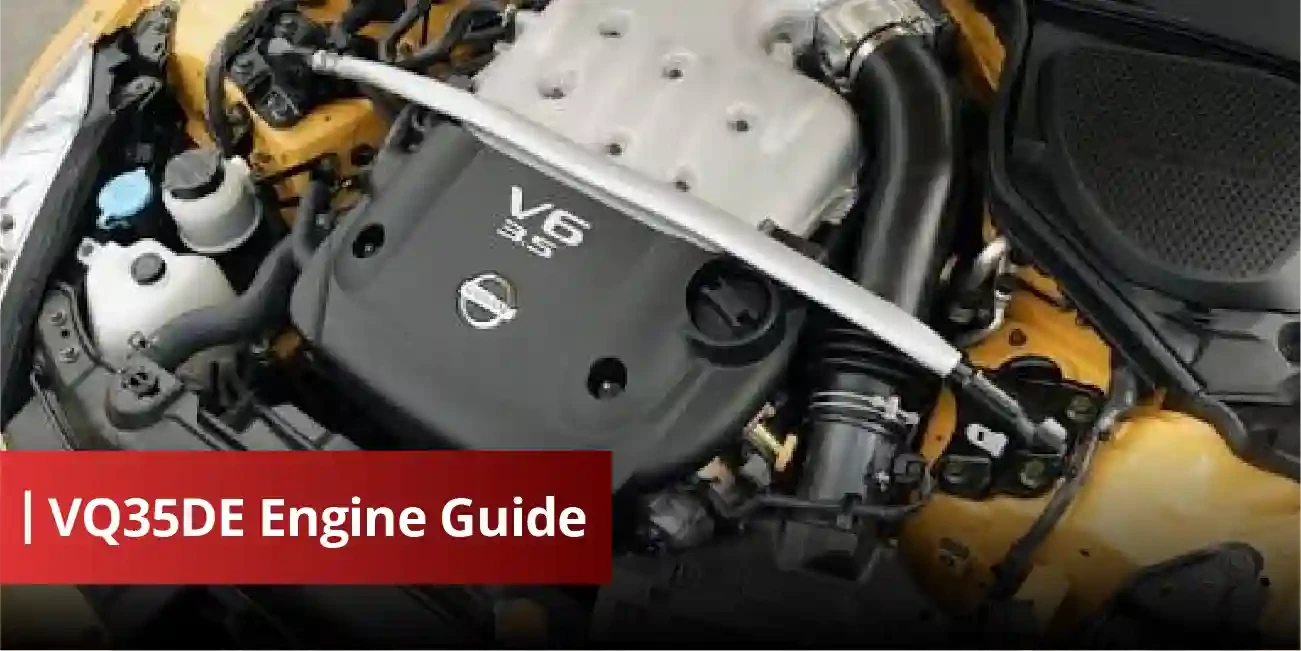
VQ35DE Engine Guide Specs, Reliability and Swap Basics
The Nissan VQ35DE is one of the most trusted V6 engines to come out of Japan. It powers everything from the 350Z to the Pathfinder, and it has a reputation for lasting well past 200,000 miles when it's cared for. If you're shopping for a VQ35DE engine, planning a swap, or just trying to understand what makes this motor tick, this guide covers it all.
What Is the VQ35DE?
The VQ35DE is a 3.5-liter V6 that Nissan built as part of its larger VQ engine family. It uses a 60-degree V angle, an aluminum block and heads, and a DOHC 24-valve layout. Nissan introduced it in the early 2000s as a replacement for the smaller VQ30DE, and it quickly became a favorite among daily drivers and tuners alike.
What sets the Nissan VQ35DE apart is how balanced it feels. It revs freely, it doesn't rely on a turbo to feel responsive, and it holds up well under normal use. That combination is a big reason the engine kept winning industry awards year after year.
VQ35DE Specs at a Glance
Here's a quick snapshot of the core specs. Numbers shift a bit by model year and application, so treat this as a general reference.
Because the VQ35DE weight sits lower than a comparable V8, it's a common pick for swaps into lighter chassis where balance matters.
Cars That Came With the VQ35DE (350Z, G35, Maxima, Pathfinder)
Nissan and Infiniti used this engine across a wide lineup. You'll find it in:
Nissan 350Z (2003 to 2006)
Infiniti G35 (2003 to 2007)
Nissan Maxima (2002 to 2008)
Nissan Pathfinder (2001 to 2004)
Nissan Altima (2002 to 2006)
Nissan Murano (2003 to 2007)
Infiniti FX35, I35, and M35
That range is part of why parts availability stays strong. A VQ35DE engine for sale from a 350Z and one pulled from an Altima share most of the same internals, though mounts and accessories differ.
VQ35DE vs VQ35HR vs Rev-Up: What Changed
This is where a lot of buyers get confused, so let's sort it out.
The standard VQ35DE covers most 2003 to 2006 applications. The Rev Up version showed up in 2005 and 2006 manual transmission 350Z and G35 models. It added CVTC on the exhaust cam, a shorter intake manifold, and a higher rev limit near 7,000 rpm. That bump pushed output up to around 298 hp.
Nissan then replaced the whole platform with the VQ35HR starting around 2007. The VQ35DE vs vq35hr comparison usually comes down to this: the HR uses a stronger block, revised heads, and different internals, so parts aren't fully interchangeable between the two. If you're chasing the VQ35DE rev up specifically, confirm the build date and transmission type before you buy, since not every 2005 model got the upgrade.
Reliability & Common Problems
The VQ35DE earns its reputation, but no engine is flawless. Here's what tends to come up as these motors age.
Oil Consumption
Some VQ35DE units burn oil faster than owners expect, especially past 100,000 miles. It's usually not a sign of a failing engine. Regular oil checks and top-offs keep it from becoming a bigger issue.
Timing Chain & Gallery Gasket Issues
The engine uses three timing chains rated for roughly 150,000 miles of service. Guides and tensioners can wear out before that, and since this is an interference engine, a chain failure can bend valves. Oil gallery gasket leaks are another known weak point on higher mileage units. Neither problem is common on well-maintained engines, but they're worth checking before you buy.
If you want a look at how another Nissan platform stacks up on durability, our SR20DET guide breaks down a very different engine with its own strengths.
Browse tested JDM Nissan engines
Tuning the VQ35DE: NA Bolt-Ons, Turbo & Supercharger
The VQ35DE responds well to basic bolt-ons. A plenum spacer, a better VQ35DE intake manifold, and a free-flowing exhaust can push output past 280 hp without touching the internals.
For bigger gains, owners look at forced induction. A vq35de turbo kit adds real power but usually calls for supporting mods like fuel system upgrades and a tune. A vq35de supercharger kit is the milder route, since it keeps throttle response closer to stock while still adding meaningful horsepower. Some builders also swap in aftermarket VQ35DE cams for a sharper power curve at higher rpm, though that's a bigger job best left to someone experienced with this platform.
If a four-cylinder swap fits your build better, our Honda B-series guide covers a completely different route worth comparing.
VQ35DE Swap Basics: What You Need
Swapping a VQ35DE isn't a bolt-in job for most chassis. You'll typically need custom motor and transmission mounts unless you're using a purpose-built kit. Cooling and exhaust routing usually need rework too, and if you're in a state with strict emissions rules, matching your donor vehicle's spec sheet matters for passing inspection.
Most DIYers find it's easier to start with a complete donor vehicle, since that gets you the engine, harness, ECU, and sensors as one matched set instead of piecing parts together separately. A VQ35DE rebuild kit can also make sense if you're starting from a high-mileage core and want fresh internals before the swap goes in.
Not sure where to start with your first swap? Our beginner swap guide walks through the basics step by step.
Buying a Used VQ35DE: JDM Low-Mileage vs Domestic
When you're looking at a vq35de for sale, you'll generally run into two options. Domestic pulls come from salvage yards in the US, and mileage on these can run high since most were daily drivers for over a decade. JDM units, on the other hand, are usually pulled from vehicles taken off the road early under Japan's vehicle inspection system, so mileage tends to run much lower.
Ask for a compression test, photos of the engine bay, and documented mileage before you commit either way. The Nissan VQ engine family has picked up more Ward's 10 Best Engines wins than any other V6 in history, so there's a long track record to draw on when you're comparing sellers and claims.
FAQs About the VQ35DE
How much HP does a VQ35DE have?
Standard versions make between 260 and 287 hp. The Rev Up variant pushes closer to 298 hp.
Is the VQ35DE a reliable engine?
Yes, for the most part. Most owners don't run into major issues before 100,000 miles, and routine maintenance keeps it running well past that.
What is the difference between VQ35DE and VQ35HR?
The HR uses a stronger block and revised cylinder heads. It replaced the DE starting around 2007, and the two don't share many interchangeable internal parts.
How much does a VQ35DE swap cost?
It varies a lot based on donor vehicle condition, mounts, and labor, but budget for more than just the engine price. Wiring, mounts, and cooling work add up.
How much boost can a stock VQ35DE handle?
Most stock internals handle mild boost with the right supporting mods, though pushing much further usually calls for forged internals.
What cars have the VQ35DE?
The 350Z, G35, Maxima, Pathfinder, Altima, and Murano all used it, along with several Infiniti models.
Looking for a tested, low-mileage VQ35DE? Call JDM Florida at (407) 774-8324 or browse our Nissan Engines category for units ready to ship.