- (407) 774-8324
- JDMFlorida@gmail.com
 Login
Login


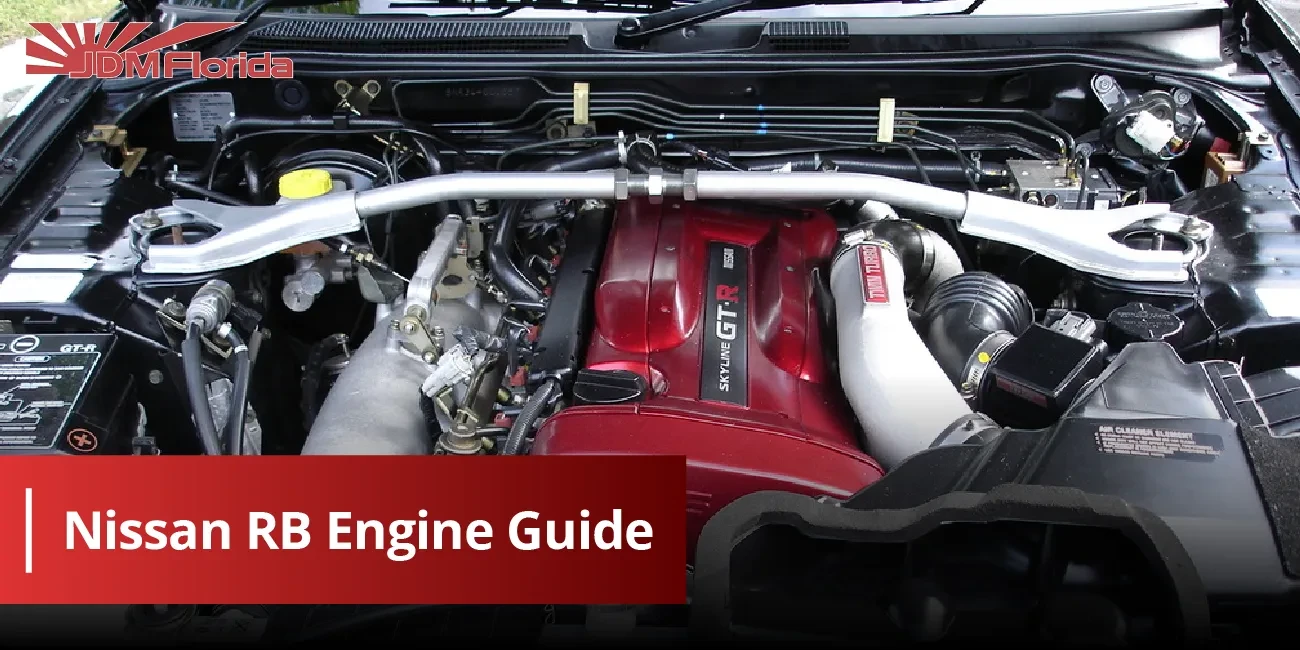
Nissan RB Engine Guide: RB20 vs RB25 vs RB26
Few engine families carry the weight the RB engine does in JDM culture. From the Skyline GTS-T to the legendary GT-R, the rb engine lineup is one of the most respected inline six platforms ever built. But RB20, RB25, and RB26 are not interchangeable, and picking the wrong one for your goals can be an expensive mistake. Here's how they actually compare.
What is the Nissan RB engine?
The rb engine is Nissan's turbocharged inline six-cylinder family, built mainly through the 1990s and used in the Skyline lineup. Being an inline six, it's naturally smooth and balanced, which is a big reason these engines have such a loyal following for swaps into chassis like the S13/S14/S15 and various Z cars.
The RB family ranges from the entry-level RB20DET up to the twin-turbo RB26DETT that powered the R32, R33, and R34 Skyline GT-R. All three share the same basic architecture but were tuned for very different purposes.
RB engine variants
RB20DET
The rb20 engine is the smallest turbocharged member of the family, found in the R32 Skyline GTS-T. At 2.0L with a single turbo, it made around 210 to 215 PS in stock form. It's not the most powerful RB, but it's the cheapest to source, and its cast iron block handles moderate power upgrades without much drama. For a lot of first-time RB builds, this is the entry point.
RB25DET
Step up to the rb25 engine and you get 2.5L of displacement in the R33 and R34 GTS-T. The rb25det pulls noticeably more torque than the RB20, and the later "Neo" version (used in the R34) added individual coil packs and variable valve timing, sharpening throttle response even further. Most builders consider this the best all-around RB for a mix of power, drivability, and cost.
RB26DETT
The rb26 engine is the one everyone knows. Built only for the Skyline GT-R (R32, R33, R34), the RB26 is a 2.6L twin-turbo inline six with individual throttle bodies and forged internals from the factory. Officially rated at 276 PS under Japan's old gentleman's agreement, real output was widely believed to be closer to 320 to 330 PS. It's the most tunable, most expensive, and most sought-after version of the family, capable of supporting 800 to 1,000-plus horsepower with the right built internals.
RB20 vs RB25 vs RB26: how they compare
Power and tuning potential
If you're chasing raw ceiling, the rb26 engine wins easily thanks to its factory forged internals and twin-turbo setup. If you want strong performance without GT-R pricing, the rb25 engine hits a great middle ground. The rb20 engine is the budget-friendly starting point, best suited to those easing into the RB platform.
Cost and availability
RB20 units are the most affordable and easiest to find. RB25s cost more but are still fairly common, especially the desirable Neo variant. RB26 engines command a serious premium since they only ever came in the GT-R, and demand for genuine units is high across the whole JDM world.
Which RB engine is right for your build?
Best budget RB
If you want inline-six smoothness and turbo power without breaking the bank, the rb20 engine is the move. It's a great learning platform and still delivers a proper RB driving feel.
Best for big power
If your end goal is a serious power build, the rb26 engine is the obvious pick thanks to its stronger internals and twin-turbo setup right out of the box. Just be ready to pay for that pedigree.
RB26 vs 2JZ: the classic debate (see our full comparison)
No RB conversation is complete without the rb26 vs 2jz argument. Both are legendary Japanese inline sixes, and both have loyal fanbases. Generally speaking, the 2JZ is known for handling huge boost on stock internals thanks to its closed-deck block, while the rb26 vs 2jz debate often comes down to the RB26's quicker-revving nature and individual throttle body setup versus the 2JZ's brute strength and slightly lower cost of entry in some markets.
We've broken this whole comparison down in detail in our 2JZ vs RB26 guide, so check that out if you're trying to decide between the two for your next build.
RB engine reliability and buying tips
RB engines are generally tough, but a few things are worth checking before you buy:
Turbo condition. Listen for excessive shaft play or oil residue at the compressor housing.
Coolant system health. RB engines are known for cracked coolant necks and aging hoses on higher-mileage units.
Oil pump and bearings on high-boost engines. If the seller mentions past tuning, ask what supporting mods were done.
Neo-specific electronics. On RB25 Neo and later units, check coil packs and VVT solenoid function.
Genuine RB26 documentation. Given how valuable these are, confirm the engine's history and mileage carefully before buying.
Where to buy an imported RB engine
Since RB-powered Skylines were never officially sold in the US, importing a genuine JDM engine is the standard path for most builds. Look for sellers who provide compression numbers, honest mileage, and clear photos of the specific unit you're buying, not stock stock imagery. At JDM Florida, we source low-mileage RB20, RB25, and RB26 engines directly from Japan and inspect each one before it's listed, so you know what you're actually getting.
Nissan RB FAQ
Which RB engine is the best?
It depends on your goal. For raw power potential, the rb26 engine is the strongest thanks to its twin-turbo setup and forged internals. For the best balance of price and performance, most builders point to the rb25 engine, especially the Neo variant.
Are RB engines legal to import?
RB-powered Skylines are JDM-only vehicles, so they fall under the 25-year import rule in the US, meaning the vehicle itself becomes legally importable once it passes 25 years from its manufacture date. Importing a standalone RB engine for a swap is a separate matter from importing the whole car, and rules can vary by state once it's time to register the swapped vehicle, so it's worth checking local requirements first.