- (407) 774-8324
- JDMFlorida@gmail.com
 Login
Login


4AGE Engine Guide: Blacktop vs Silvertop, Specs & Swaps
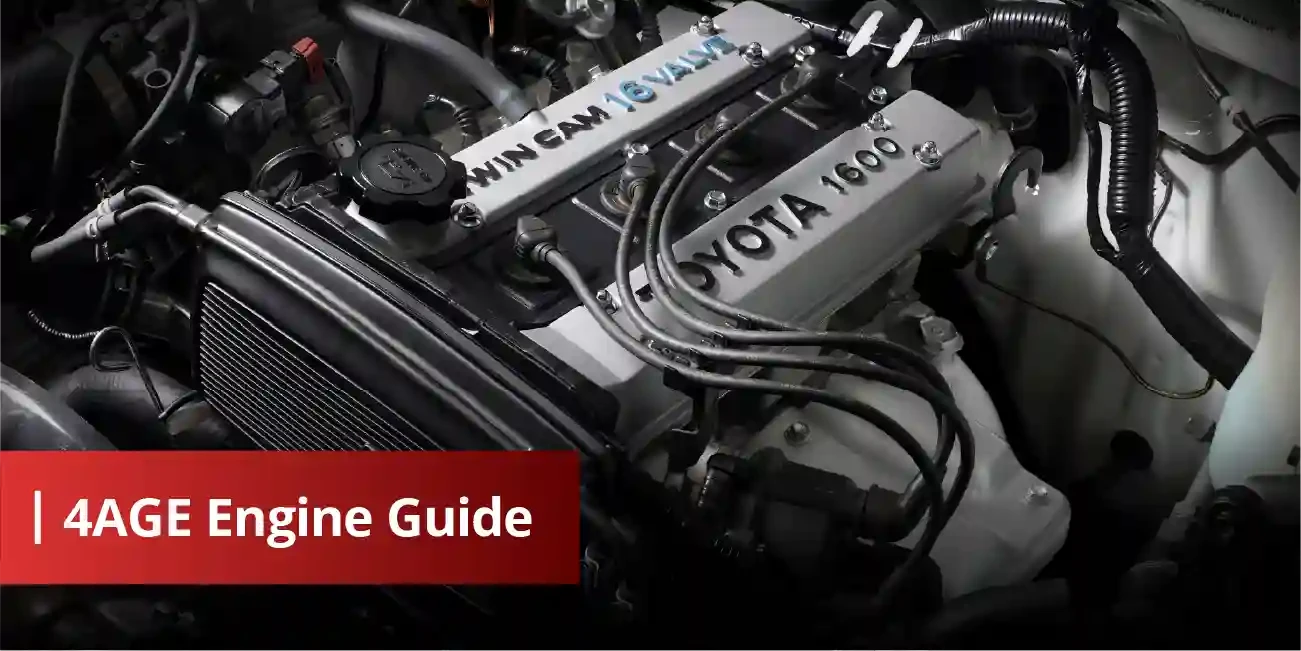
The 4age engine is one of the most legendary small displacement motors Toyota ever built. If you grew up watching Initial D or you are just deep into the JDM scene, you already know this engine by sound alone. It is light, it revs hard, and it turned the AE86 into a folk hero. But before you drop money on one, you need to know which version you are actually looking at, because "4AGE" covers a lot of ground. Some are worth every penny. Some are worn out shells with a good name attached. This guide breaks down the whole family so you buy the right one the first time.
What Is the Toyota 4AGE?
The 4AGE is a 1.6 liter inline four cylinder engine that Toyota built from the early 1980s through the mid 2000s. It has a twin cam head, which was a big deal when it launched, and it became the heart of some of the most beloved cars in Toyota history.
You will find it in the AE86 Corolla Levin and Trueno, the MR2 AW11, and later the Corolla and Sprinter lineups. It is not a big power engine on paper. Stock output ranges from around 112 to 165 horsepower depending on the version. But raw numbers do not tell the whole story here.
What makes the 4AGE special is how it delivers that power. It loves to rev. It responds fast. It is light enough that it does not throw off the balance of a small chassis like the AE86. That combination is why this engine has such a cult following decades after it stopped being built.
If you are shopping for one, you are probably chasing that specific driving feel. Good news, you are in the right place.
There is also a cultural side to this engine that numbers cannot capture. The 4AGE is tied to grassroots motorsport, drift culture, and touge driving in a way very few engines are. It became the default choice for budget builders who wanted a car that felt alive without needing a huge power figure to back it up. That reputation is exactly why demand for clean units has stayed strong even decades after production stopped.
4AGE Generations at a Glance
Not every 4AGE is the same engine wearing a different badge. Toyota updated it several times, and each version has its own personality. Here is the quick breakdown before we go deeper.
If you see a 4AGE for sale without a clear generation listed, ask. The difference in price and performance between a 16V and a 20V blacktop is massive.
Silvertop vs Blacktop 20V
This is where most buyers get confused, and it is the single most common question people ask before buying a 4age 20v.
Both the silvertop and blacktop are 20 valve versions with individual throttle bodies, which give that iconic ITB scream at high RPM. But they are not identical.
The silvertop came first. It has a higher factory redline and is known for being a bit more raw and aggressive in feel. It also has a reputation for being slightly less forgiving if you are not on top of maintenance.
The blacktop 4age blacktop came later and added VVT to the intake cam, which smooths out the midrange without killing top end power. It also got some internal refinements that made it a bit more reliable long term. Most enthusiasts consider the blacktop the peak of the 4AGE lineup.
Quick comparison:
Silvertop: raw power delivery, higher redline, slightly rarer now
Blacktop: VVT smoothness, most refined tune, generally easier to find parts for
Both: ITBs, twin cam, that unmistakable high rev scream
If you can find a clean blacktop, most builders will tell you to grab it. But a well kept silvertop is still a fantastic engine and often costs less.
4AGE Specs & Power
Numbers vary by generation, so treat this as a general guide rather than gospel for every single unit.
Displacement: 1.6 liters
Compression: high, typically over 10:1 depending on version
Redline: 16V versions sit around 7,500 to 7,800 RPM, 20V versions can push past 8,000 RPM
Power: 16V ranges roughly 112 to 130 horsepower, 20V ranges roughly 160 to 165 horsepower stock
The individual throttle bodies on the 20V versions are a huge part of the appeal. They give faster throttle response and a much more direct connection between your right foot and the engine. It is one of those things you have to drive to really understand. Photos do not do it justice.
Keep in mind these are naturally aspirated numbers. This is not a torque monster. It is a revver. If you want big low end grunt, this is not your engine. If you want something that rewards keeping it high in the rev range, the 4AGE delivers that in a way few other engines from this era do.
Weight is another factor people underrate. The 4AGE is genuinely light for a twin cam engine, which is a big reason it works so well in small rear wheel drive chassis. A heavy engine up front kills balance in a car like the AE86. The 4AGE keeps that balance intact, which is exactly why it became the go to choice for drivers who care more about how a car turns than how fast it goes in a straight line.
4AGZE, The Supercharged 4AGE
There is also a supercharged version worth knowing about, the 4AGZE. Toyota used a Roots type supercharger on this variant, mostly found in later MR2 models.
The 4AGZE trades some of that high rev screaming character for a fatter torque curve and stronger low end pull. It is a completely different driving experience compared to the naturally aspirated 20V.
If your build goal is raw driving feel and high RPM excitement, stick with the 20V. If you want more usable power without going full turbo swap, the 4AGZE is worth researching further, though it is rarer and pricier to source in good shape.
Reliability & Common Issues
4age reliability is generally solid if the engine has been maintained properly, but there are a few things every buyer should check before handing over cash.
Timing belt: this is not optional maintenance. If it snaps, you are looking at bent valves at minimum. Always confirm when it was last replaced.
Oil consumption: some higher mileage units burn a bit of oil. Not a dealbreaker, but factor it into your decision.
ITB syncing: on 20V versions, throttle bodies need to stay synced for smooth idle and response. A rough idle can mean they are out of balance.
Head gasket: watch for coolant mixing with oil, a classic sign of head gasket failure on high mileage units.
None of these issues are unique to the 4AGE. Every engine this old needs some TLC. The key is buying from a source that actually checks compression, inspects the timing components, and is honest about mileage and history instead of just slapping a price tag on it.
It also helps to ask about the wiring harness and ECU when buying a 20V. These engines rely on their factory electronics to run the ITBs correctly, and a mismatched or hacked together harness can cause headaches that have nothing to do with the engine itself. A complete, matching setup saves you a lot of troubleshooting down the line.
4AGE Swaps, AE86, MR2, Starlet & More
A 4age swap is one of the most popular ways to bring an old Toyota chassis back to life, or to build something completely different from the factory intent.
Common swap destinations include:
AE86: the classic pairing, though many AE86 owners are actually upgrading from a 16V to a 20V within the same family
MR2 AW11: factory home for some 4AGE and 4AGZE versions, popular for engine swaps between generations
Starlet: a lightweight chassis that becomes a genuine pocket rocket with a 20V swap
Kei cars and other lightweight Toyotas: builders love dropping a 4AGE into anything small enough to make the power to weight ratio absurd
Because the 4AGE is compact and lightweight, it fits into chassis that were never designed for anything close to its output. That is a big part of why the swap community around this engine has stayed active for so long.
Before starting any swap, do your homework on mounts, wiring, and ECU compatibility. A 20V swap into an older chassis usually needs more than just dropping the engine in. You are looking at new mounts, a matching harness, and often a different ECU tune to get everything talking correctly. It is not a weekend project, but the payoff is a car that feels completely transformed once it is done.
Where to Buy a 4AGE
Sourcing a 4age for sale sounds simple until you actually start looking. Prices vary wildly, and condition matters more than almost anything else with an engine this old.
Before you buy, check for:
Compression numbers across all four cylinders
Confirmation of generation, do not just trust the seller's word, ask for photos of the head and block
Timing belt and water pump service history
Any signs of a rebuild versus a straight pull from a donor car
Whether the ITBs and wiring harness are included, since these are pricey to source separately
Buying from a dealer that specializes in JDM engines is usually the safer route compared to random online marketplace listings. You want someone who actually tests compression and documents the engine's condition instead of just describing it as "runs great" with no proof.
Shipping and import history matter too. Ask how the engine was stored, whether it sat outside for months, and how it was crated for transport. A well packed engine from a reputable importer arrives in far better shape than one thrown in a container with no protection. These small details end up saving you real money in the long run.
Is the 4AGE Right for Your Build?
Not every engine fits every goal. Here is a quick way to think about it based on what you are actually trying to build.
Go with a 16V if: you want a period correct AE86 build, budget matters, and you are fine with a slightly lower ceiling on power
Go with a 20V silvertop if: you want that raw, high revving character and do not mind hunting for parts
Go with a 20V blacktop if: you want the most refined version of this engine with the smoothest power delivery
Go with a 4AGZE if: you want more low end torque and are open to a rarer, pricier engine
Whichever version fits your build, the 4AGE remains one of the purest naturally aspirated experiences to come out of Japan in the eighties and nineties. It is not about big numbers. It is about how it makes you feel behind the wheel.
At the end of the day, this is an engine people build entire projects around, not just an engine they drop in and forget about. Take your time picking the right generation, buy from a source you trust, and you will end up with something that feels genuinely special every time you start it up.
Ready to Source Your 4AGE?
If you are ready to start your build, browse our full Toyota Engine collection for verified 4AGE and 4AGZE units, complete with documented compression testing and honest condition reports. We source directly, so you know exactly what you are getting before it ships.